
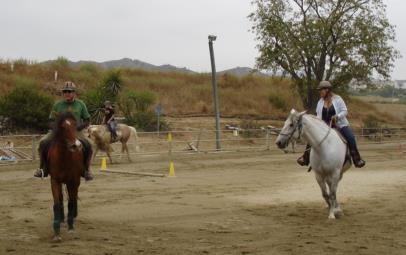
It’s a busy day here at the barn. Several horses and riders are using the arena. One is lunging at one end. Another is a complete beginner working on just getting her horse to go where she wants it to. Still another is working on barrel racing while another is setting up a jump. What’s a rider to do? How can all these riders co-exist in the same arena without someone getting hurt? This is where simple arena etiquette comes into play. Many different riders and horses can co-exist in the same space if you all know the “rules of the road”. That along with some old fashioned good manners and we can all work in safely the same space.
- Lunging should not be allowed in the same arena with riders. Horses being lunged can be very volatile- bolting and bucking just because they can. This behavior can be contagious sending other horses off on a tangent or the horses being lunged may get loose and cause havoc for the riders in the arena. It’s best if a separate lunging arena or round pen is provided. If that’s not possible, make a rule that no one may lunge if anyone is riding in the same arena.
- Have separate arenas for specific purposes. One with jumps, another with barrels, yet another for beginners. If separate arenas isn’t an option, set aside separate space within one arena with cones or other barriers. I keep my beginner students at one end of the arena, leaving the opposite end available for my boarders to use. This practice keeps everyone safe and happy. The students don’t feel they have to try to avoid riders moving quickly and the boarders are free to practice their more advanced skills without interference.
-
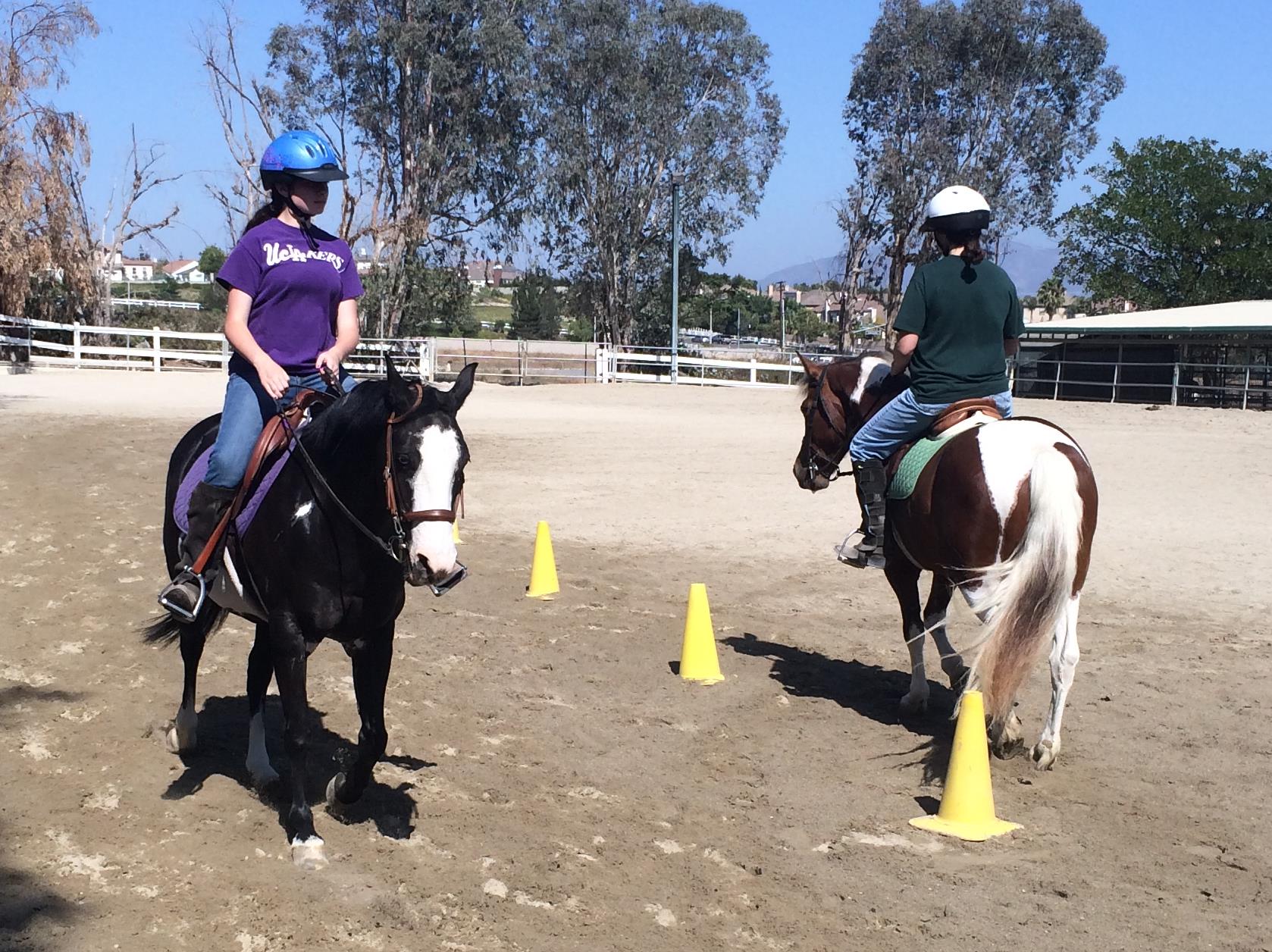
Left to left is best! Left shoulder to left shoulder. This is the first rule I teach my riders. If I have more than a single person in a lesson this is taught as soon as I feel they can safely pass each other without getting in trouble. It’s a pretty simple one- the riders should pass each other with their left side toward the other rider. Another way to look at it is- the rider tracking left will stay on the rail while the rider tracking right will yield the rail and move to an inside track.
- Call your rail. If you are approaching another rider in the ring, call out to that rider where you intend to go- “Inside!” or “Outside!”. That way the other rider will know what track you will take and can change or not as needed. Just make sure you know the difference between Inside (toward the center of the arena) and Outside (toward the rail). Good intentions can quickly go awry if you make the wrong call. A mistaken call here can result in a collision or at the least some very quick stopping practice.
- Fastest on the inside. While this may be contrary to some barns arena rules, I feel it’s the safest. The faster rider will be able to change their direction more quickly than a slower rider. Also the rider on the rail has the least amount of flexibility when it comes to changing their course. If they are going slowly, say at a walk or very slow jog, they really won’t have much choice when it comes to making a change of direction. Those off the rail have more choices as to where to go if things get close.
- Claim your territory. If you are going to be working on a specific skill, such as jumping, let the other riders know your intended path. “I’m taking the outside line”. That way they know not to cut across in front of the jumps just as you are making your approach. The same goes for trail obstacles, barrels, etc. Just give a shout out and you’ll be all set.
So that’s it. If everyone keeps to the rules, a safer riding environment can be had for all. Now you just have to be sure everyone knows the rules. Post signs on the arena’s if you can, i.e. – This arena reserved for lunging or This arena for jumping practice only. If that’s not possible, just make sure you have taught the rules to your students. They will pass on the information and soon the entire barn will be well informed and riding safely. Have a magnificent and safe ride!
Cheryl Rohnke Kronsberg is a Certified Horsemanship Association Master Instructor and Clinic Instructor. Cheryl graduated from Rawhide Vocational College and Fullerton College. She is also an AQHA Professional Horsewoman. Cheryl has been teaching riding and horsemanship for over 30 years, training students from beginner up to world level competition. Currently she and her husband own and operate CRK Training Stable in Yorba Linda, CA. We welcome your comments and questions. Please feel free to share this article with your friends, but rights to publish this article in any format including digital and print are restricted. You must have written permission from the author to use this material. For more interesting articles from Cheryl go to www.crktrainingstable.com